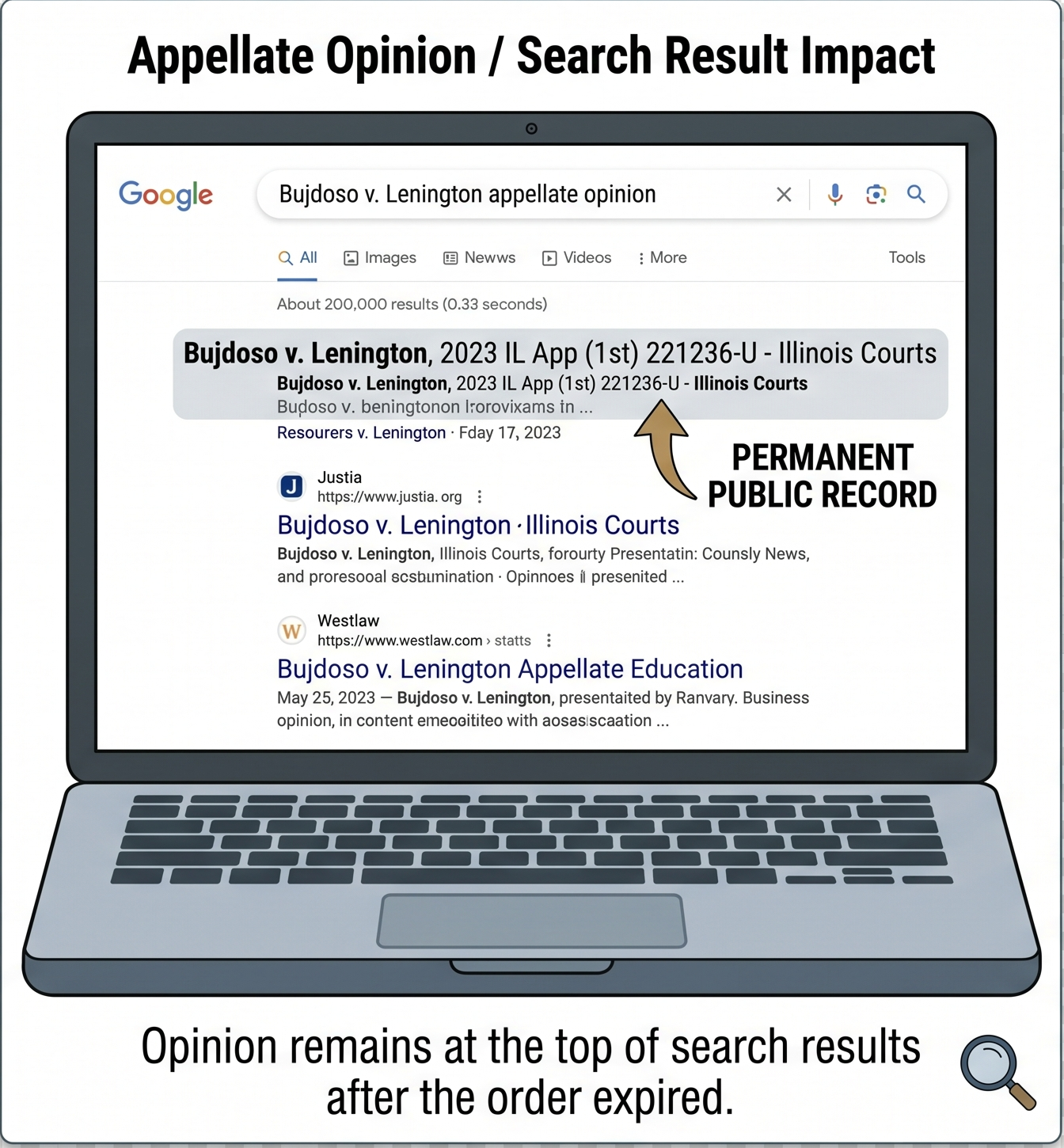
In November 2023 the Illinois Appellate Court, First District, published an opinion in Bujdoso v. Lenington that appears as one of the top results when you search my name. That opinion is the court's account of a dispute. This site is mine.
I am based in Chicago. I work in the wine and hospitality industry. I was the subject of a petition for order of protection filed in Cook County's Domestic Violence Division in November 2020. I represented myself throughout the proceedings — through the trial court, the appellate court, a petition for rehearing, and a petition for leave to appeal to the Illinois Supreme Court.
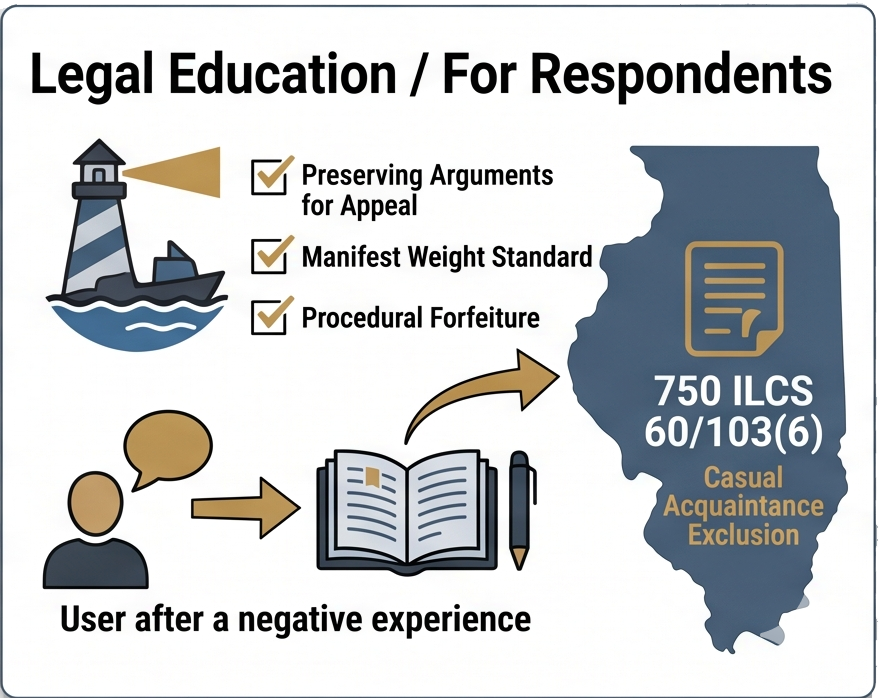
I lost. Partly because I believe the legal outcome was wrong on the merits. Partly because I was fighting without the tools most people assume are available. There is no right to counsel in civil domestic violence proceedings. I had no money for a private attorney. AI legal assistants were not widely available in 2020. Court clerks provide guidance to petitioners navigating the filing process — that assistance does not extend to respondents in the same way. I did not know what manifest weight of the evidence meant, what Rule 341 required, or that arguments not cited to the record are forfeited on appeal. I learned all of those things after they had already cost me the case.
Steve Lincoln called me on approximately five occasions before scheduled hearings to offer an Agreed Order. I declined every time. I was not willing to place any order in the court system with my name next to hers, give the other side any leverage, or waive any right I had. Most people would have signed. I understood exactly what I would be giving away and I refused. That decision made the proceedings longer and the outcome more permanent. I stand by it.
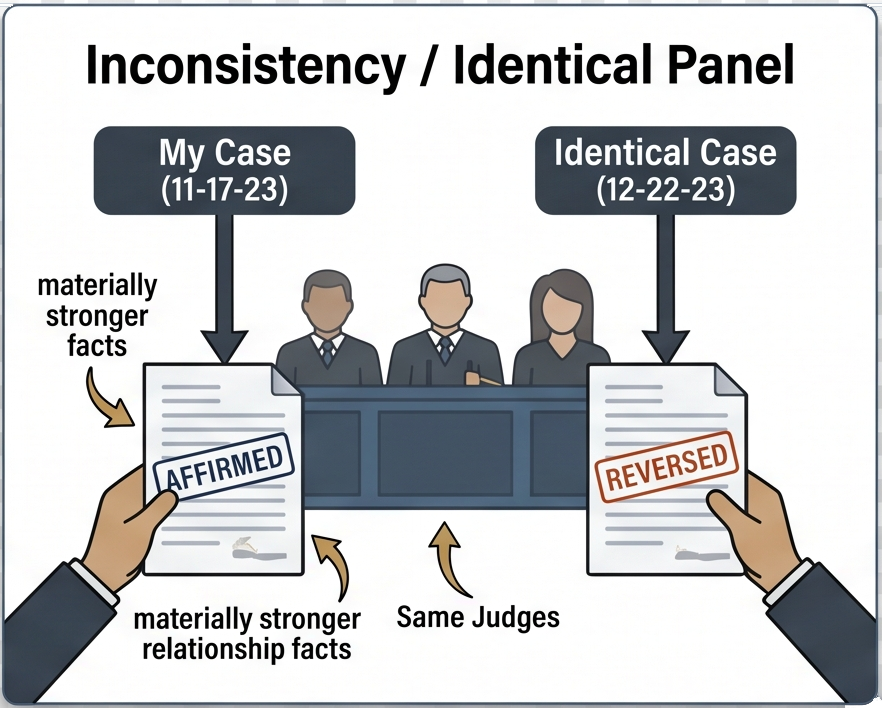
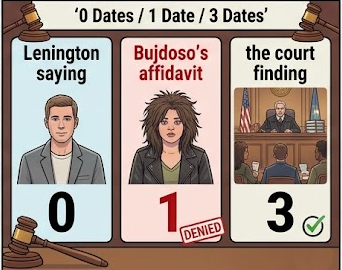
What is also true is that every interaction between us occurred in a business or social context that the statute explicitly excludes from the definition of a dating relationship. Her own text message from 2016 — written four and a half years before she filed anything — says no date occurred. Her own sworn affidavit says one date. The trial court found three. And five weeks after affirming my case, the same panel reversed a nearly identical case on stronger facts.
The order expired in July 2024. I am legally free. The opinion is permanent. This site exists so that anyone who searches my name has access to both sides of the story — and so that anyone navigating similar circumstances has the information I did not have.
Everything on this site is either drawn from the public court record, clearly labeled as my opinion, or general legal information. Record citations are provided throughout so anyone can verify. Nothing here is legal advice.
On the full court record: The complete common law record, report of proceedings, and all filed documents in this matter are part of the public record of the Cook County Circuit Court and the Illinois Appellate Court, First District. The appellate opinion — 2023 IL App (1st) 221236-U — is publicly available through the Illinois courts system and legal databases including Westlaw and Casetext. Journalists, attorneys, researchers, and anyone else who needs the full authenticated record should obtain it directly from those sources.




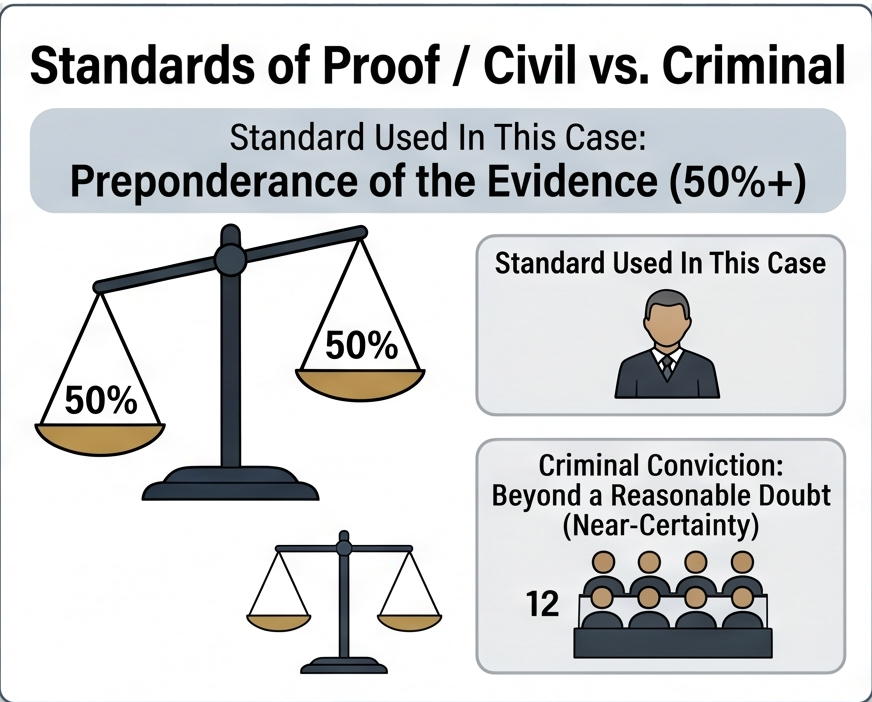
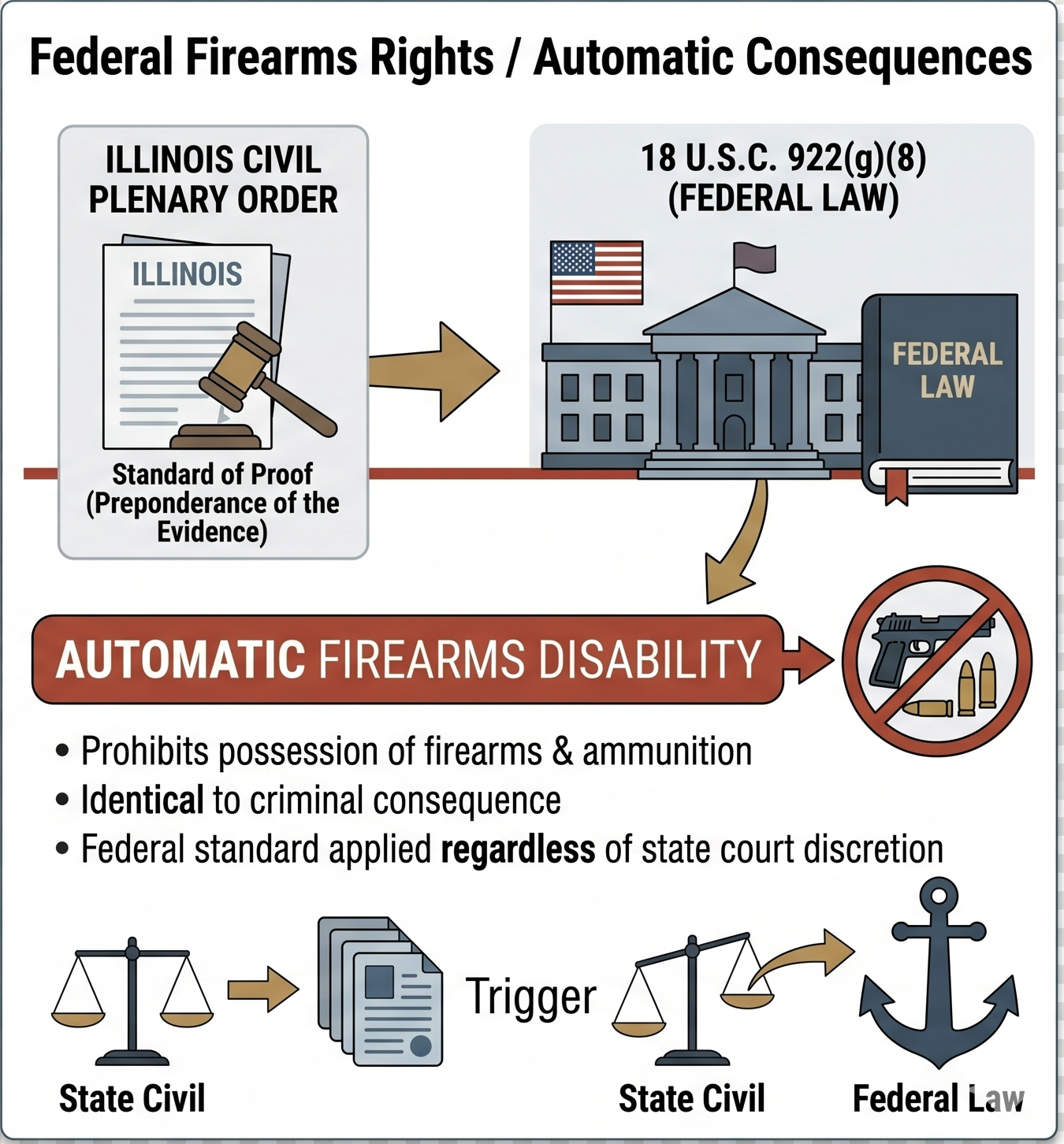 Federal firearms disability under 18 U.S.C. 922(g)(8). A person convicted of criminal domestic violence after a jury trial proving guilt beyond a reasonable doubt loses the right to own a firearm. A person subject to a civil order of protection entered by one judge under the preponderance standard also loses the right to own a firearm — for the duration of the order. The federal law makes no distinction between the two. The consequence is identical. The standard of proof required to trigger it is not. In this case, a two-year federal firearms disability was imposed based on one person's uncorroborated testimony about events from four and a half years earlier, in a civil proceeding with no jury, no physical evidence, and no corroborating witnesses.
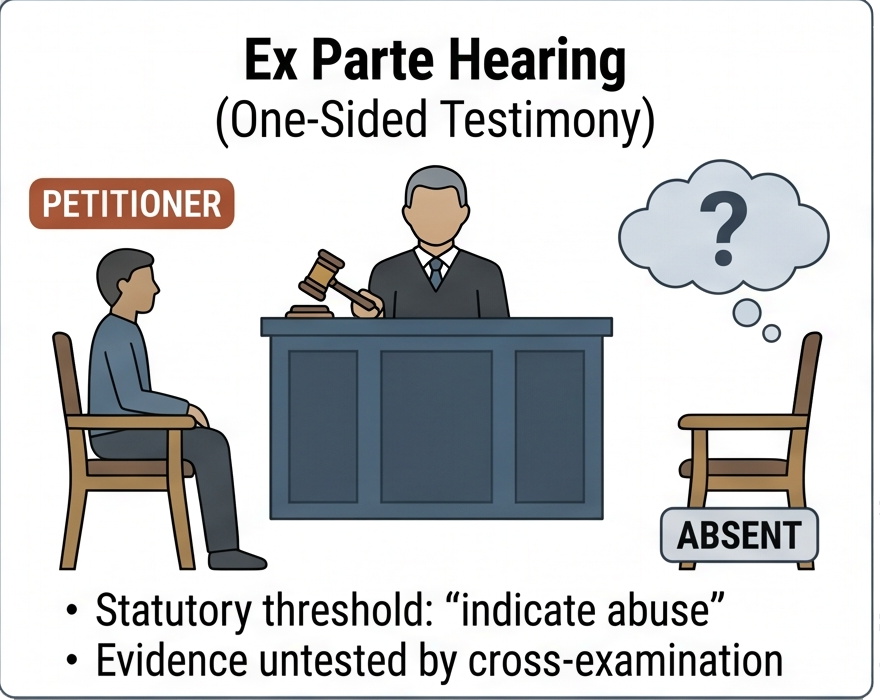 Before the plenary hearing — before any cross-examination, any evidence, any opportunity to respond — an Emergency Order of Protection can be granted the same day a petition is filed. The statutory standard under 750 ILCS 60/214(c)(4) requires only that the court examine the petitioner under oath and find that the petition's averments are "sufficient to indicate abuse." No respondent present. No evidence tested. No cross-examination. No opportunity to deny. In this case the emergency order was granted on November 6, 2020, based on a brief hearing in which Bujdoso testified alone. That order triggered a federal firearms disability the same day. It remained in effect, extended repeatedly, for nearly two years before the plenary hearing concluded. By the time Lenington had his first opportunity to present his full account before a court, the emergency order had already been in place for eighteen months.
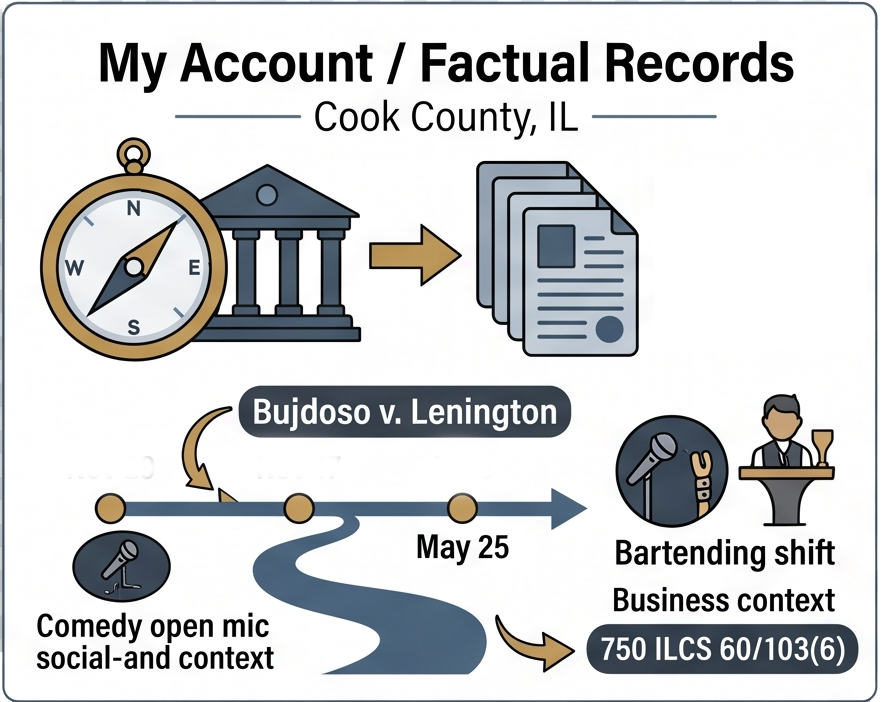
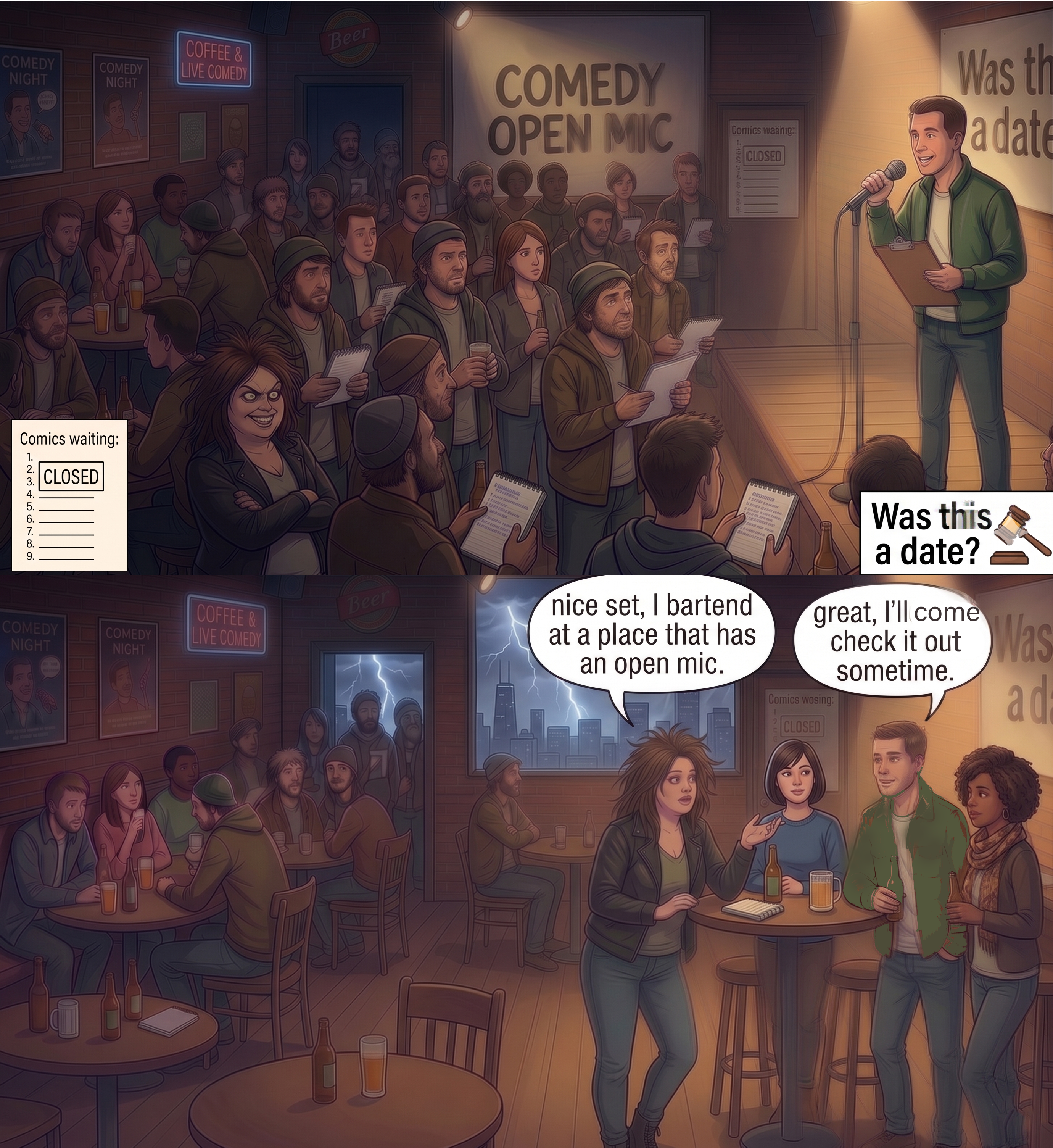
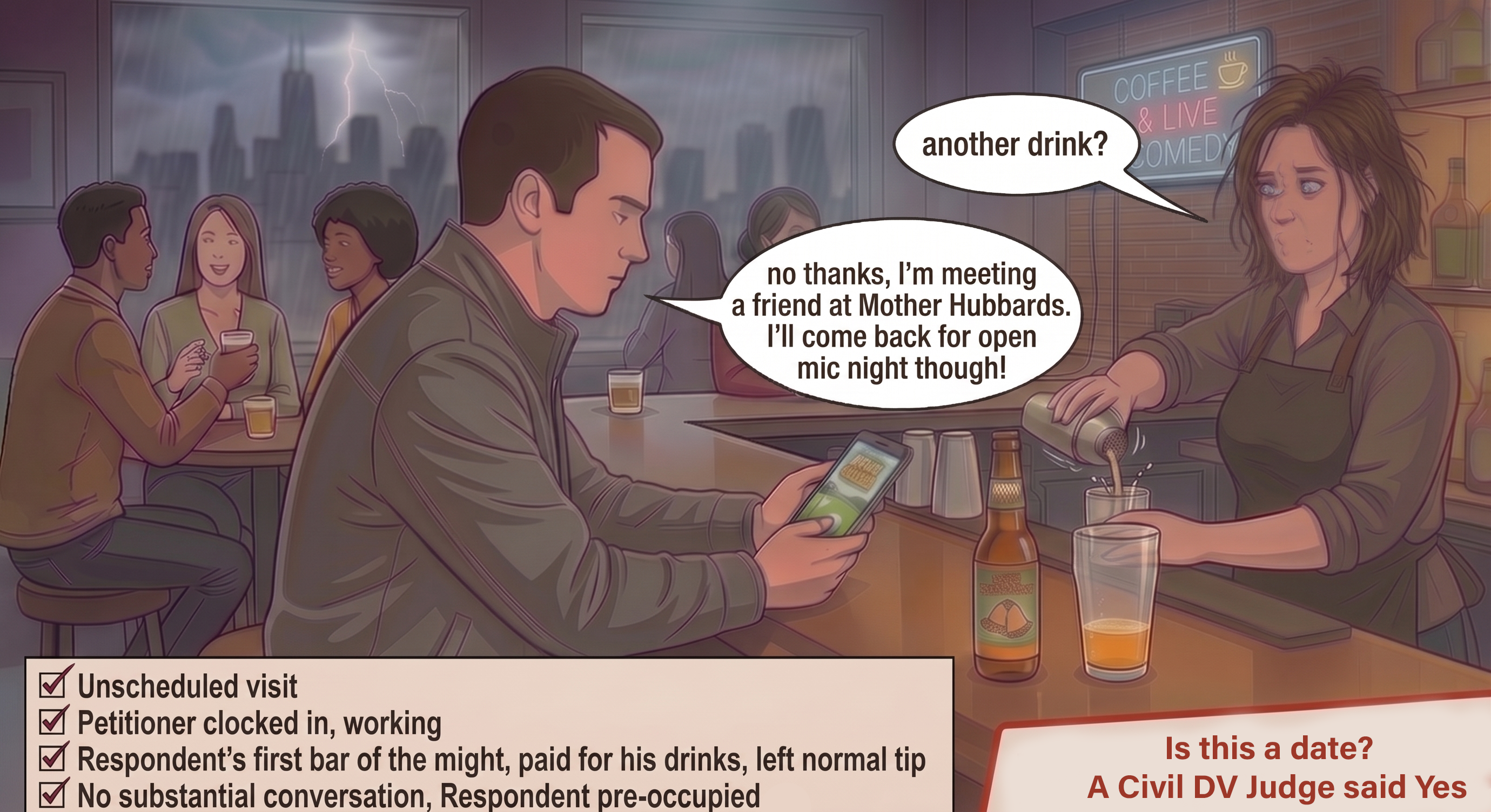
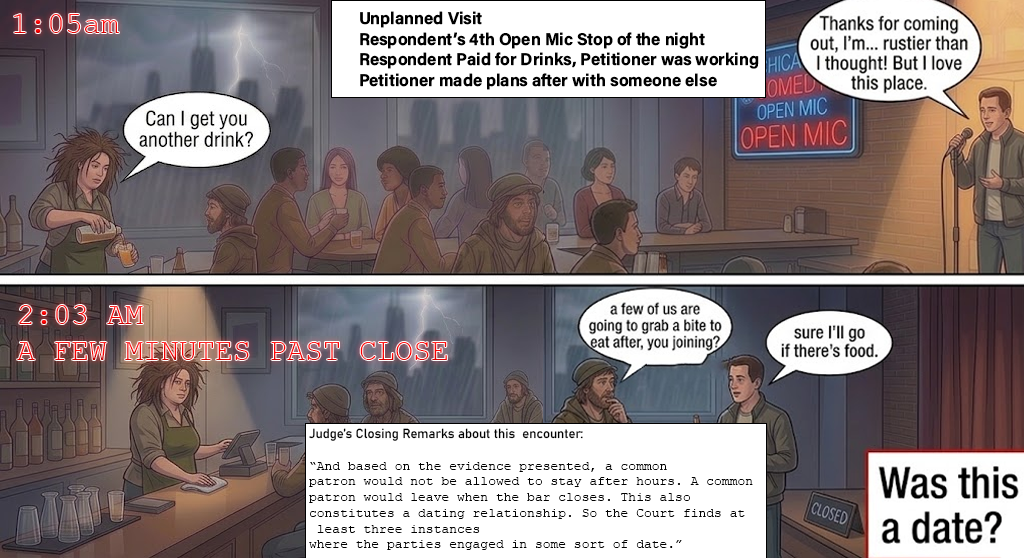
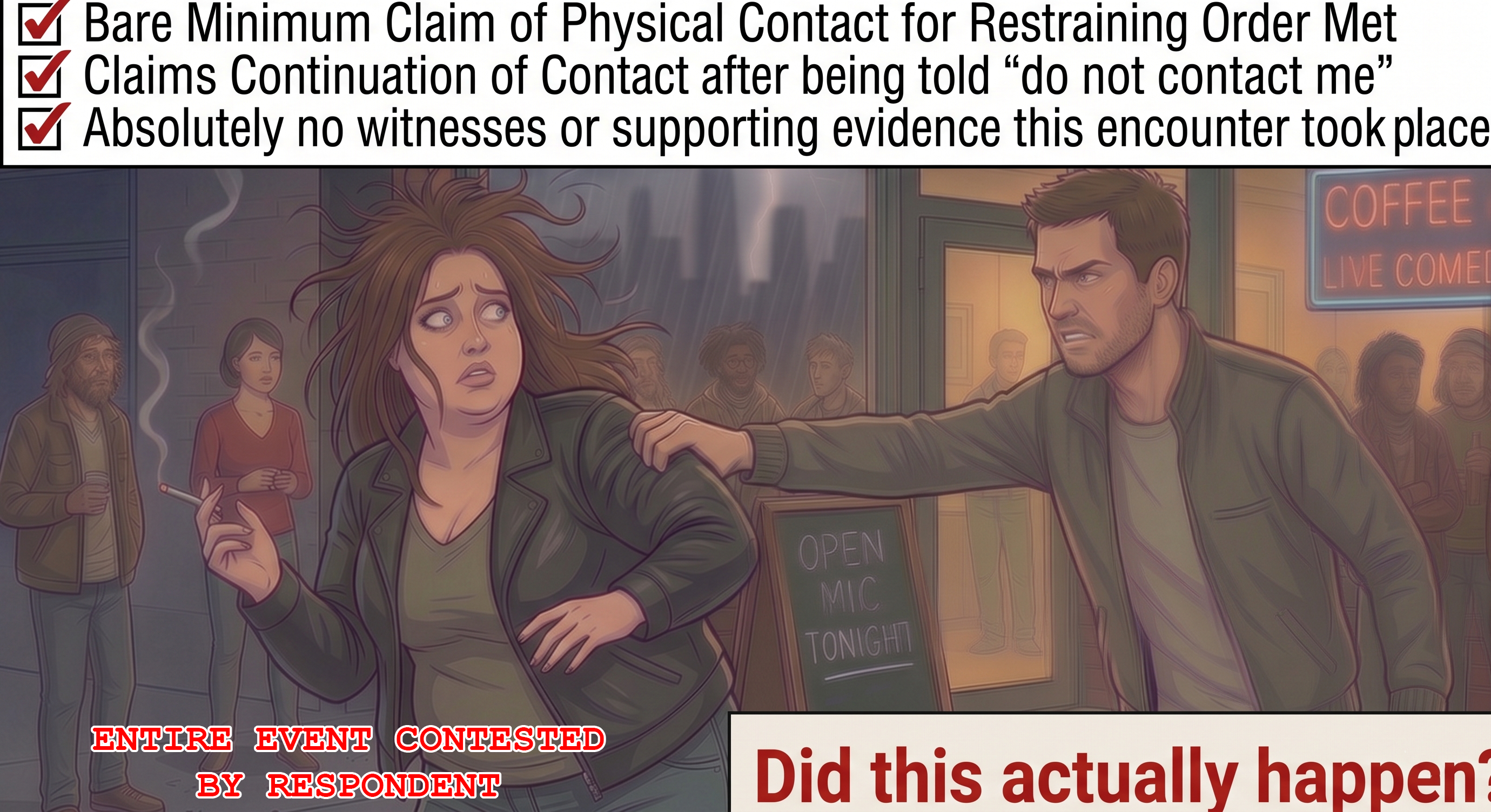
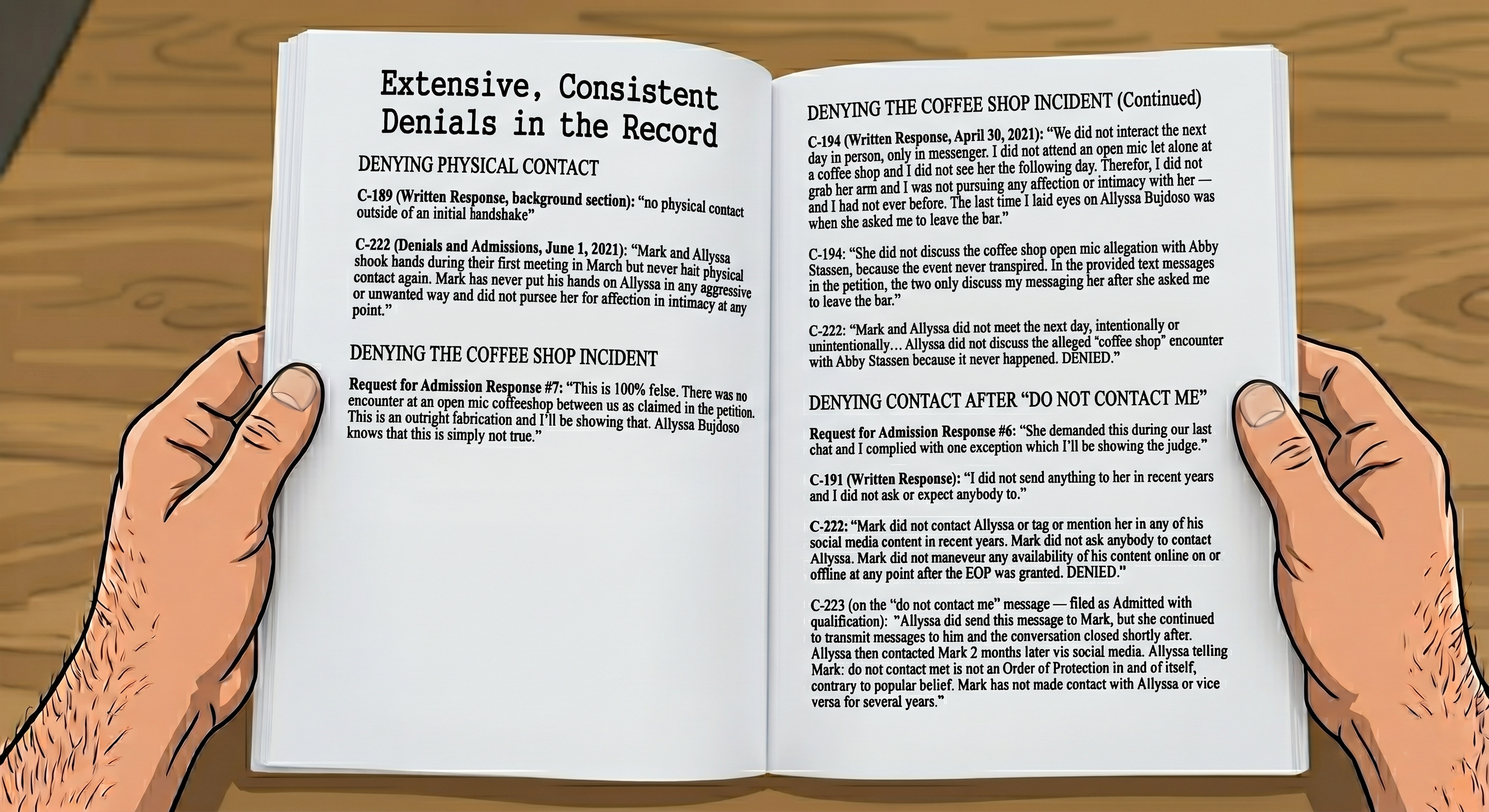
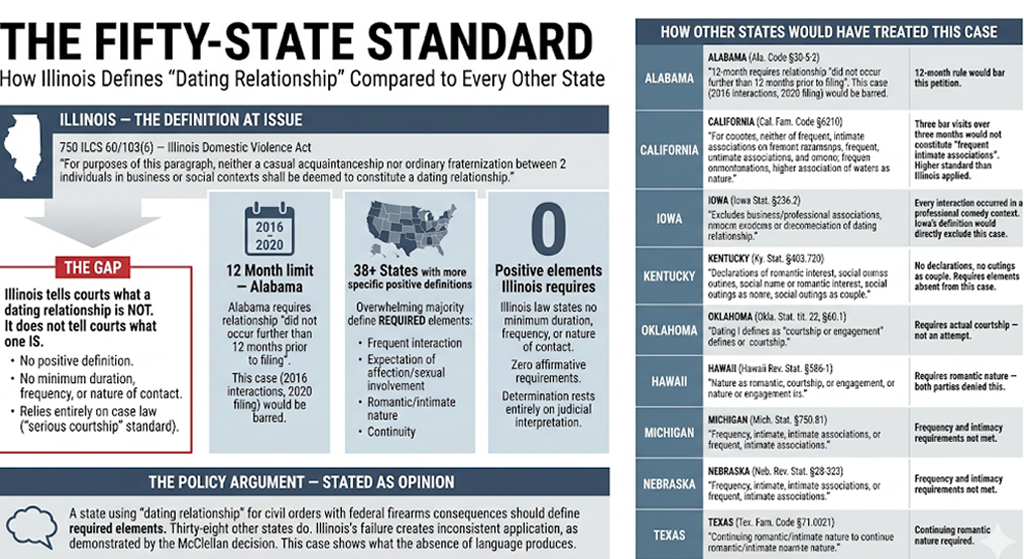
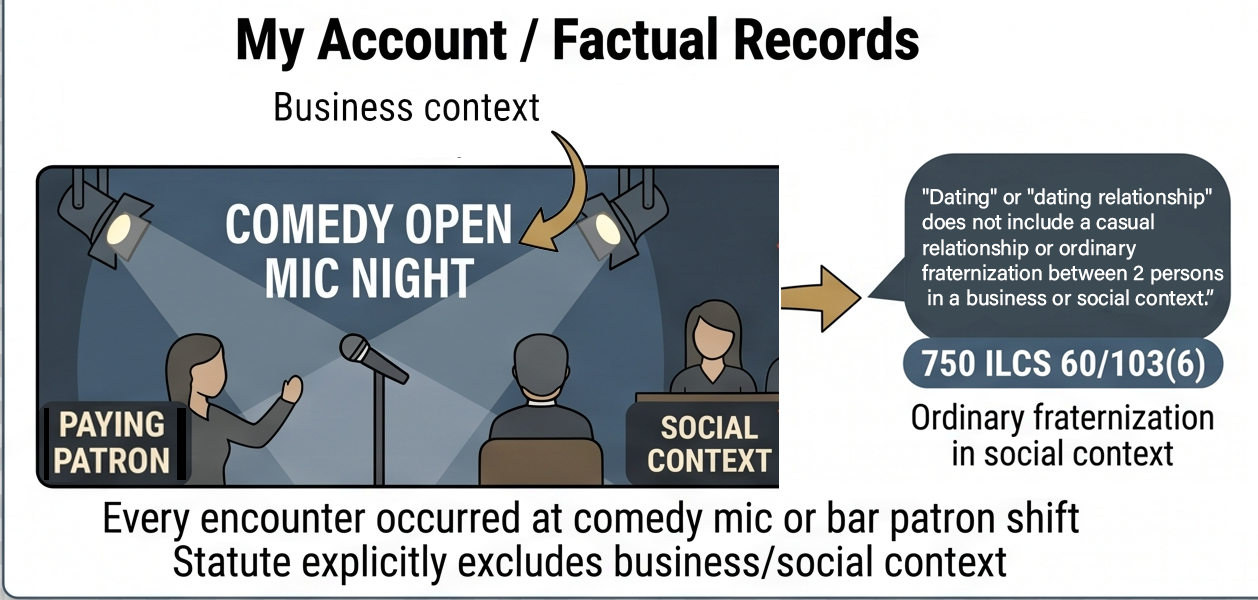 March 2016: I was emcee at an open mic where she was one of approximately fifty performers. April 2016: I visited her bar as a patron to assess it as a performance venue. May 2016: I performed at her bar's open mic and stayed as a paying customer until she asked me to leave at closing. That was the entirety of our in-person contact. Every occasion involved me performing comedy, her bartending, or both. The Illinois Domestic Violence Act explicitly states that "ordinary fraternization between 2 individuals in business or social contexts shall not be deemed to constitute a dating relationship." Neither party disputed what those interactions consisted of.
The trial court characterized both bar visits as "dates" constituting a serious courtship. Bujdoso's own contemporaneous text to Abby Stassen — written the night of or shortly after May 23, 2016 — describes what she told Lenington that night: his opinion was "uninformed and unnecessary at best, considering tonight was the second ever time you've been here, and first time for the mic." In her own real-time words: the May 23 visit was his second visit to the bar and his first ever visit to an open mic there. The court called it a date. She called it his second time at the establishment. Both statements are in the record.
March 2016: I was emcee at an open mic where she was one of approximately fifty performers. April 2016: I visited her bar as a patron to assess it as a performance venue. May 2016: I performed at her bar's open mic and stayed as a paying customer until she asked me to leave at closing. That was the entirety of our in-person contact. Every occasion involved me performing comedy, her bartending, or both. The Illinois Domestic Violence Act explicitly states that "ordinary fraternization between 2 individuals in business or social contexts shall not be deemed to constitute a dating relationship." Neither party disputed what those interactions consisted of.
The trial court characterized both bar visits as "dates" constituting a serious courtship. Bujdoso's own contemporaneous text to Abby Stassen — written the night of or shortly after May 23, 2016 — describes what she told Lenington that night: his opinion was "uninformed and unnecessary at best, considering tonight was the second ever time you've been here, and first time for the mic." In her own real-time words: the May 23 visit was his second visit to the bar and his first ever visit to an open mic there. The court called it a date. She called it his second time at the establishment. Both statements are in the record.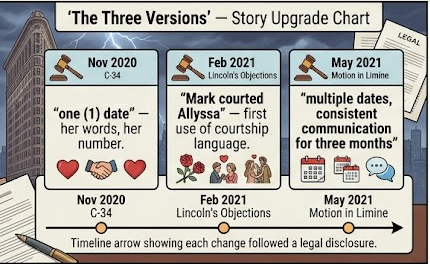 The description of the relationship between Lenington and Bujdoso changed three times across filed documents. Each change is precisely dated. None was accompanied by an explanation of why recollection suddenly improved.
Stage 1 — November 6, 2020 (original affidavit, C-34): "went on one (1) date." Written by word and by number. At the ex parte hearing the same day, Bujdoso testified she "would not have called him my boyfriend." The first judge hearing the case said: "I'm not sure you even have a dating relationship with him."
Stage 2 — February 25, 2021 (Lincoln's Written Objections, paragraph 2): "The parties enjoyed a brief dating relationship in 2016, during which MARK courted ALLYSSA." This is the first documented appearance of the word "courted" anywhere in the record. It appears in a filing dated February 25, 2021 — within weeks of Lenington's January 2021 Motion to Vacate, which cited Alison v. Westcott. The legal standard was disclosed. Within weeks, the language shifted to match it.
Stage 3 — May 28, 2021 (Lincoln's Motion in Limine, paragraph 1): "the parties communicated on a consistent basis for almost three (3) months and the parties went out on dates." Plural dates. Consistent communication for three months. This filing was made after Lincoln's own Exhibit B — the full Facebook Messenger conversation — was already in the record. That exhibit shows scattered messages over 63 days on comedy industry topics. It describes no dates, no intimate content, no consistent communication. The characterization in the Motion in Limine contradicts Lincoln's own submitted evidence.
There is also a documented timeline discrepancy. At the ex parte hearing on November 6, 2020, Bujdoso testified the bar incident occurred "that summer, it was around July." The trial testimony, the judge's ruling, and every other document establish the bar incident as May 23, 2016 — two months earlier. That is a two-month discrepancy in the central incident of the case, between the first sworn account and the later one.
The description of the relationship between Lenington and Bujdoso changed three times across filed documents. Each change is precisely dated. None was accompanied by an explanation of why recollection suddenly improved.
Stage 1 — November 6, 2020 (original affidavit, C-34): "went on one (1) date." Written by word and by number. At the ex parte hearing the same day, Bujdoso testified she "would not have called him my boyfriend." The first judge hearing the case said: "I'm not sure you even have a dating relationship with him."
Stage 2 — February 25, 2021 (Lincoln's Written Objections, paragraph 2): "The parties enjoyed a brief dating relationship in 2016, during which MARK courted ALLYSSA." This is the first documented appearance of the word "courted" anywhere in the record. It appears in a filing dated February 25, 2021 — within weeks of Lenington's January 2021 Motion to Vacate, which cited Alison v. Westcott. The legal standard was disclosed. Within weeks, the language shifted to match it.
Stage 3 — May 28, 2021 (Lincoln's Motion in Limine, paragraph 1): "the parties communicated on a consistent basis for almost three (3) months and the parties went out on dates." Plural dates. Consistent communication for three months. This filing was made after Lincoln's own Exhibit B — the full Facebook Messenger conversation — was already in the record. That exhibit shows scattered messages over 63 days on comedy industry topics. It describes no dates, no intimate content, no consistent communication. The characterization in the Motion in Limine contradicts Lincoln's own submitted evidence.
There is also a documented timeline discrepancy. At the ex parte hearing on November 6, 2020, Bujdoso testified the bar incident occurred "that summer, it was around July." The trial testimony, the judge's ruling, and every other document establish the bar incident as May 23, 2016 — two months earlier. That is a two-month discrepancy in the central incident of the case, between the first sworn account and the later one.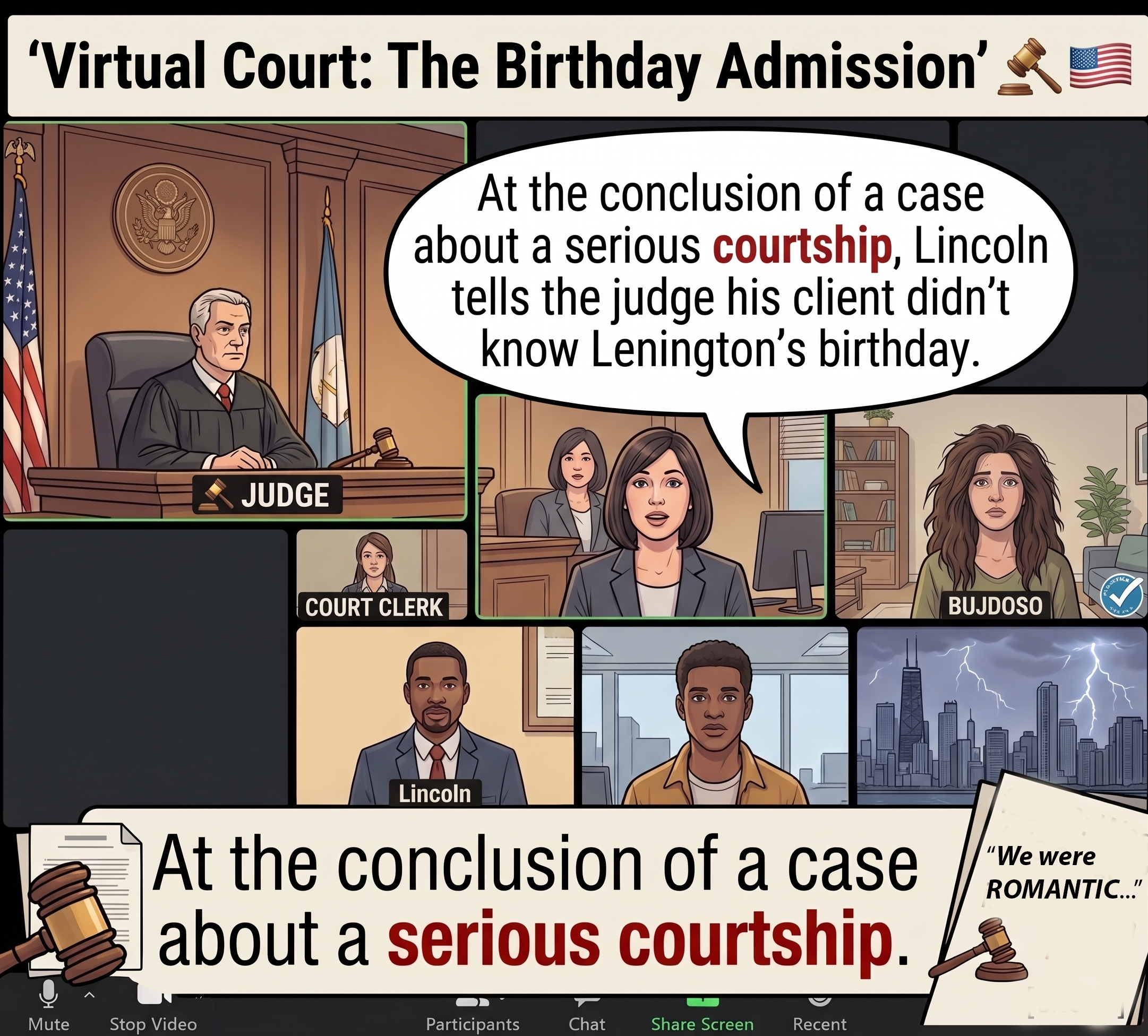
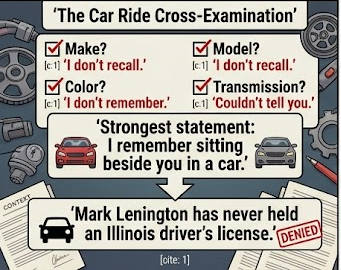 Her testimony supported the claim that I knew where she lived by stating I had driven her home on one occasion. I stated throughout these proceedings — beginning with my written response at C-191 — that I have never owned or operated a vehicle in Illinois and have never held an Illinois driver's license. This is verifiable through state DMV records. I cross-examined her on this claim directly.
 There is one screenshot of a Facebook Messenger exchange in which I asked whether she wanted to get dinner sometime and whether she was single. She said yes to both. The dinner was never arranged. It never happened. In the same conversation both parties expressed they were not looking for anything serious. That one screenshot is what the petitioner built an entire case on. Everything else — the claimed date at Flat Iron, the claimed daily communication, the claimed courtship, the claimed car ride home, the claimed arm-grab at the coffee shop — rests on testimony alone. No corroborating document. No witness. No police report. No contemporaneous mention to anyone. One unremarkable social invitation surrounded by sworn statements that the record itself contradicts. That is the evidentiary foundation of a two-year order of protection and a permanent published appellate opinion.
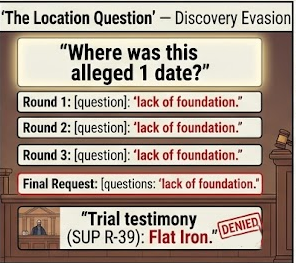 In her May 23, 2016 Facebook Messenger exchange with Lenington — submitted by Lincoln as Exhibit B to his own filings — Bujdoso writes: "We went out after to flat iron to talk business." The "we" refers to her and David, the other person present at North Bar that night. This is the only contemporaneous mention of Flat Iron in any document connected to this case. It describes a visit to Flat Iron that does not involve Lenington and characterizes it as a business conversation. At trial, Bujdoso testified that her date with Lenington took place at Flat Iron in May 2016 (SUP R-39). This was the first time "Flat Iron" appeared in any court filing as the claimed date location — not in the original affidavit, not in any pre-trial sworn filing. In every round of discovery — February 2021, the reformatted version, the final request in April 2021 — Lenington's first question was: "Which location were you referring to in your claim that we went on one (1) date?" The question was asked three times. It was never answered.
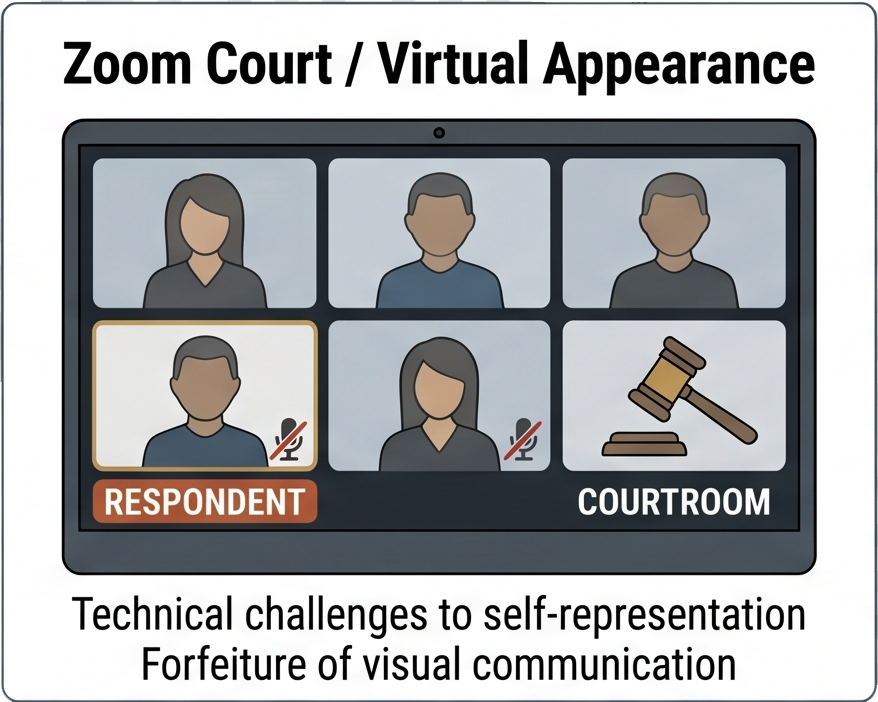 In his Opposition to the Motion in Limine (C-225), Lenington documented: "Mark was also unaware that the hearing was set for 2pm and was under the assumption that it would be held at 9am. Mark requested the disposition sheet but the court failed to provide it to him although the Petitioner's attorney was provided with it." A represented party does not walk into their own hearing not knowing what time it starts. The disposition sheet — the document specifying the hearing time — was provided to Lincoln but not to Lenington. He called the courthouse in May and still was not told the correct time for the June 1st hearing. This is the asymmetry in practice: Lincoln knew when the hearing was. Lenington had to guess.
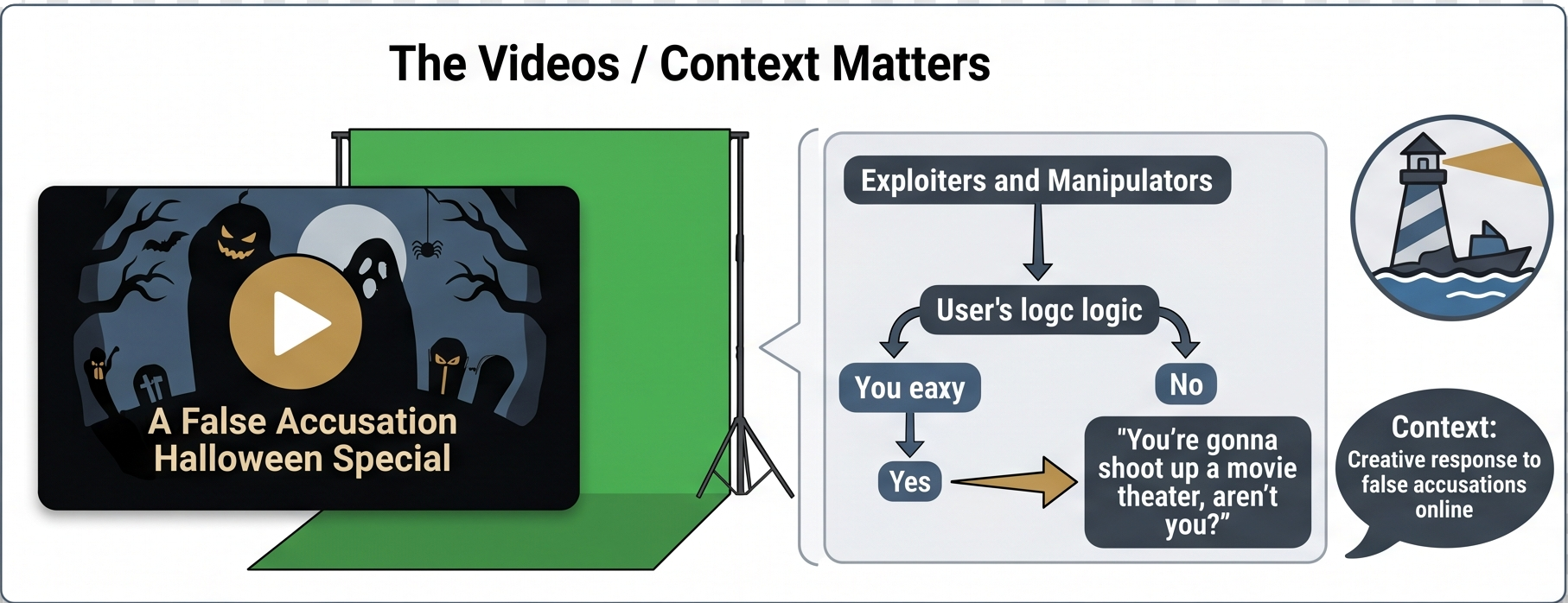 The honest accounting: The video was graphically violent, in poor taste, and created a context that was easy to weaponize against me legally. I should not have made it the way I did. That said — it was fiction, publicly posted, inspired by Chicago's own horror-comedy tradition, and made by someone who had been subjected to years of false accusations online with no recourse. The pandemic, the isolation, the pile-on of people calling me things I was not — that was the context. Context does not excuse the content. But context is part of the truth, and the truth is what this site is for.